Diagnostic Approach in Homeopathic Treatment

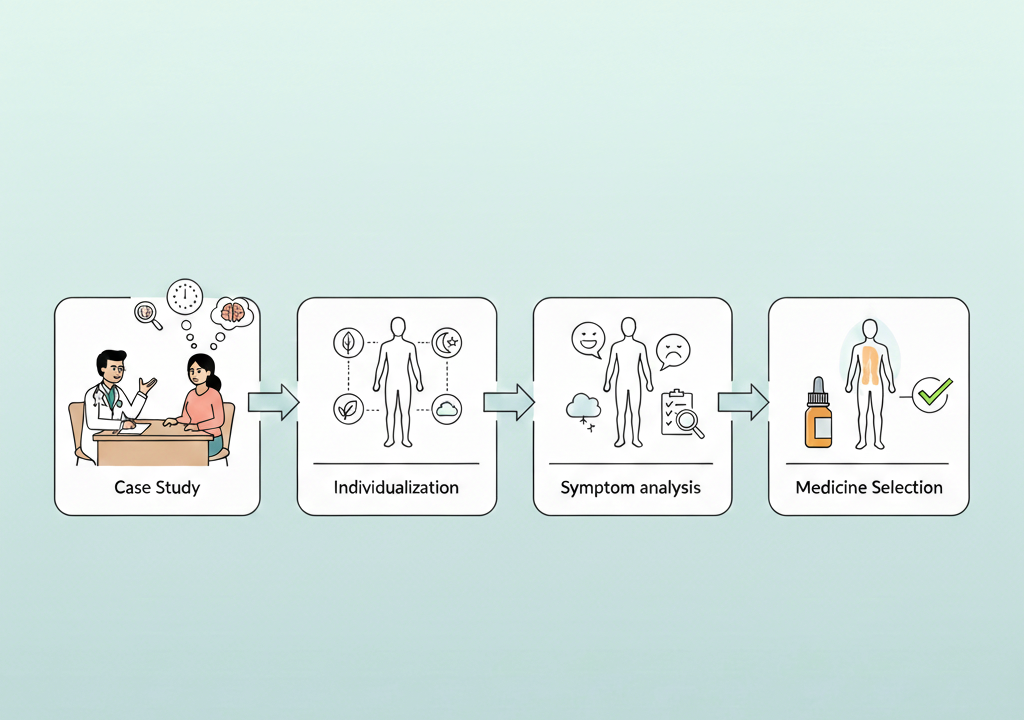
Homeopathic diagnosis is a comprehensive and individualized process that goes beyond identifying a disease label. While conventional medicine often focuses primarily on laboratory tests and physical findings, homeopathy emphasizes understanding the patient as a whole—physically, mentally, and emotionally. The goal is to identify the unique symptom pattern of the individual in order to select the most appropriate remedy.
Holistic Case Taking
The foundation of homeopathic diagnosis is detailed case taking. During the consultation, the practitioner carefully gathers information about:
- Current physical symptoms
- Onset and duration of the illness
- Triggers and relieving factors
- Emotional and mental state
- Sleep patterns and dreams
- Appetite, thirst, and food preferences
- Past medical history
- Family health history
This detailed conversation helps the practitioner understand the overall constitution of the patient.
Individualization of Symptoms
In homeopathy, not all symptoms are treated equally. Special attention is given to:
- Unusual or peculiar symptoms
- Symptoms that clearly distinguish one patient from another
- Emotional responses connected to physical complaints
For example, two patients with migraines may receive different remedies depending on their personality traits, stress response, and specific symptom patterns.
Physical Examination and Medical Reports
Although homeopathy is holistic, responsible practitioners may also consider:
- Physical examination findings
- Laboratory reports
- Imaging results (if available)
These tools help ensure an accurate understanding of the condition and determine whether additional medical care is required.
Totality of Symptoms
After gathering all relevant information, the practitioner analyzes the totality of symptoms—the complete picture of the patient’s condition. The selected remedy is chosen based on how closely it matches this total symptom pattern.
This process is known as remedy selection and may involve consulting homeopathic reference texts such as repertories and materia medica.
Follow-Up and Reassessment
Diagnosis in homeopathy is not a one-time event. Follow-up visits are essential to:
- Monitor changes in symptoms
- Evaluate overall improvement
- Adjust potency or remedy if necessary
Progress is assessed based on both physical improvement and overall well-being.
Important Considerations
- Homeopathic diagnosis complements but does not replace conventional medical diagnosis.
- Serious or emergency conditions require immediate conventional medical attention.
- Self-diagnosis and self-medication are not recommended without professional guidance.
Conclusion
The diagnostic approach in homeopathic treatment is thorough, individualized, and holistic. By considering the complete physical and emotional profile of the patient, homeopathy aims to provide personalized care rather than treating only the disease name. Proper evaluation by a qualified practitioner is essential for safe and effective treatment.